Smart Water Box: a DIY guide to building a small water-from-air unit
Smart Water Box is a digital DIY guide with video walkthroughs that, according to the seller, shows how to make a compact atmospheric water collection unit at home. This independent site explains what it is, what it needs and where its limits are.
- Digital download
- One-time payment (listed)
- 60-day guarantee (listed)
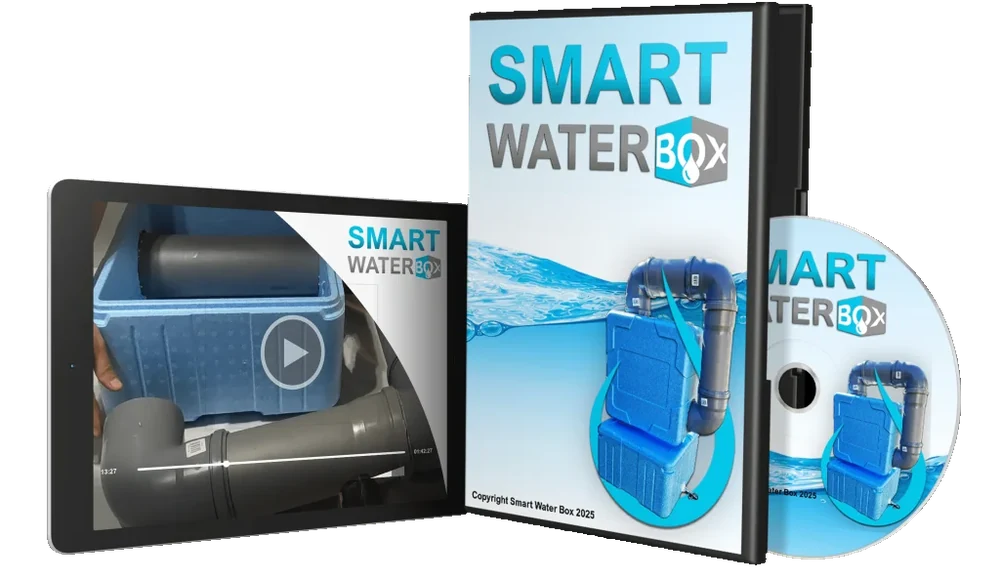
- Digital productNothing is shipped to you
- Video walkthroughWatch each build stage first
- DIY buildParts you source yourself
- 60-day guaranteeSeller-stated, via ClickBank
What is Smart Water Box?
Smart Water Box is a digital DIY guide with video walkthroughs. According to the seller, it teaches you to build a small atmospheric water collection unit at home. It is not a physical appliance, not a certified water purifier and not a guaranteed source of drinking water.
The buyer receives online access to a written guide and videos. Parts, tools and materials are bought separately. The offer is processed by ClickBank. This website is an independent affiliate site that explains the product; it is not the seller's official website. We have not built the system or measured its output, and we do not claim to have.
- Product: Smart Water Box (digital guide and video)
- Main subject: DIY atmospheric water collection
- Price: $39.69 one-time at checkout as of Oct 13, 2026 (owner-confirmed); re-check before paying
- Guarantee: 60 days, seller-stated
- Independent testing found: none
Looking for more? Read the full guide overview, our research-based review, seller and official-site information or the buying checklist.
Why people build their own water collector
Water usually feels like the one thing we never need to think about. You turn a tap and it runs. Then a storm knocks out a pumping station, a main pipe bursts, or a boil-water notice goes out, and a household can go from carefree to anxious in an afternoon.
That is the reason a growing number of people take an interest in backup water ideas. Some are campers and off-grid hobbyists. Some live in places where supply is unreliable. Others simply enjoy practical projects and want to understand how a piece of technology works by building it with their own hands.
Smart Water Box sits in that last group. It is a learning-by-doing guide, not a magic appliance. It shows you how a basic atmospheric water collector can be put together from common materials, and it gives you the pictures and video to do it without an engineering background.
The idea behind it, in plain language
Air always holds some water vapor. When that air meets a surface that is cooler than its dew point, the vapor turns into liquid droplets. You see the same thing on a cold glass of water on a warm day.
Air flows in
Ambient air carrying moisture moves into the unit. The more humid the air, the more water there is to collect.
It meets a cool surface
When warm, humid air touches a cooler surface, the vapor condenses into droplets. This is ordinary physics, not a trick.
Droplets are gathered
The droplets run down into a container, where they build up slowly over time.
The water is treated
Collected water should be filtered, disinfected and tested before anyone considers drinking it. See the safety section below.
Humidity, temperature, energy and operating conditions
Any condensation-based collector is governed by a few physical limits. The National Weather Service defines dew point as the temperature to which air must be cooled, at constant pressure, to reach 100% relative humidity. Condensation only happens on a surface at or below that temperature, so the unit needs both moist air and a surface that is cold enough.
Humidity and temperature
Humid air carries more vapor to collect. Very dry air carries little, and cold air holds less vapor than warm air. This is why collection is generally better in warm, humid places and poor in dry, cold ones. Conditions also change between day and night and across seasons, so one good afternoon does not predict a month.
Energy use
Creating a cold surface takes energy unless the environment provides it. Commercial machines use refrigeration or sorbent materials and consume power. Whether the Smart Water Box design uses electricity, and how much, has not been independently verified here; the seller's materials should say. Ask before you buy, because operating cost can matter as much as the purchase price.
What research shows
A 2017 paper in Science demonstrated water harvesting at humidity as low as about 20% using a specialised metal-organic framework sorbent. It shows the principle is real. It was a laboratory device, not a condensation box, and it says nothing regarding the performance of any hobby build.
Water collection is not the same as drinking water
Condensed water looks clean, but appearance is not a safety test. It can pick up dust and microbes from the air, residues from collection surfaces and substances from the materials of the unit and its storage containers. Standing water in a damp, warm container is also a place where microbes can grow.
The EPA and CDC describe boiling and chemical disinfection as ways to kill most microorganisms in emergency water, and the EPA notes these methods do not remove heavy metals, salts or most chemicals. So treating the water and choosing suitable materials are separate jobs. Only testing tells you what is in your water. The World Health Organization publishes the international drinking-water quality guidelines against which water is judged.
A home build should never be described as a certified purifier unless real certification exists, and none is known for this guide. Do not drink untreated water from an unverified DIY system.
What you get with the guide
The offer is delivered digitally, so you can start reading and watching as soon as your payment is approved. Here is what the package includes.
- The Smart Water Box build guide with diagrams and step-by-step directions for assembling the unit
- Video walkthroughs that show the assembly on screen, so you can see how pieces fit together
- Free bonus guides that are included with the current offer: SunHeat DIY solar water heating blueprint and Home DIY Secrets
- A 60-day money-back guarantee handled by the seller and ClickBank
Contents and bonuses can change. Check the checkout page for the current list.
What you still need to provide
The guide teaches you the build. You supply the parts, the tools and the time. Pipes, fittings, containers and similar materials are bought separately, so your total cost will be higher than the price of the guide alone. Build a simple parts list and a budget before you start.
Honest expectations, before you buy
A guide like this is only worth buying if you know what it can and cannot do. Here is the plain version.
What Smart Water Box is
- A digital DIY guide with video, not a finished machine
- A way to learn how atmospheric water collection works by building a small unit
- A project for hobbyists, campers, preparedness-minded households and curious tinkerers
- An inexpensive way to explore the idea before spending real money on commercial equipment
What it is not
- Not a ready-to-use appliance, and nothing physical ships to you
- Not a certified water treatment system, and not guaranteed to produce drinking water
- Not an unlimited supply. Output depends on humidity, temperature and how well your build performs
- Not a replacement for stored emergency water or a licensed plumber when you need one
Water safety comes first
Water that you collect and store at home can pick up dust, microbes and residue from the materials it touches. A home-built unit has not been tested or certified by any authority, so treat the output with caution.
- Do not drink water from a home-built unit unless it has been properly filtered, disinfected and tested.
- Use food-grade, drinking-water-safe materials for anything that contacts water you plan to drink.
- Until you are sure, use the water for tasks that do not involve drinking, such as watering plants or cleaning.
- Follow guidance from your local health authority, the CDC or the EPA on treating and storing emergency water.
- Do not rely on a DIY unit as your only source of water in an emergency. Keep stored drinking water on hand.
Is this project right for you?
It may suit you if
You enjoy hands-on projects, you are comfortable following written and video instructions, and you want to understand water collection from the ground up. You also accept that a DIY build takes testing and patience.
It may suit you if you are preparing
You are putting together a layered plan for emergencies. A small collector can be one learning step among others, such as stored water, a quality filter and a plan for purification.
It may not suit you if
You want a plug-and-play solution, you do not want to buy parts or handle basic tools, or you need a guaranteed supply of safe drinking water. A certified commercial product is the better path for that.
How a first build usually goes
Every project is different, but DIY builds tend to follow a similar rhythm. Plan for a bit of tinkering.
Watch and read first
Go through the guide and the videos from start to finish before buying anything. Seeing the whole picture helps you spot parts you will need and steps you want to double-check.
Make your parts list
Write down what you need, check prices at your local hardware store and set a budget. Choose materials that are rated for contact with drinking water if you may ever drink from the unit.
Assemble and check
Follow the build steps carefully, test fits before you glue or seal anything, and keep your workspace clean. Take your time on joints and seals, since leaks are a common source of trouble.
Run, observe, adjust
Set the unit up in your climate and watch how it behaves. Humidity and temperature change through the day and across seasons, so your results will move with them. Small adjustments are part of the process.
Treat and test the water
Before drinking any collected water, filter it, disinfect it and have it tested. Until then, use it for non-drinking purposes.
Mistakes that trip up first builds
None of these are unique to this project. They are the usual DIY pitfalls, and knowing them early saves time and money.
Buying parts too soon
Finish the guide and videos before you shop. It is easy to buy the wrong size or type of fitting when you have only skimmed the instructions.
Skipping the leak test
A slow drip you do not notice can waste the water you work so hard to collect, and can damage the surface underneath. Test every joint with the unit in place.
Expecting instant results
Condensation is gradual. Judge your unit over days and across different weather rather than a single hour, and keep notes so you can compare changes.
Using the wrong materials
Not every plastic, glue or container is safe for drinking water. If you ever plan to drink from the unit, choose materials rated for it and check the labels.
DIY guide versus a commercial unit
| Smart Water Box (DIY) | Commercial water generator | |
|---|---|---|
| Format | Digital guide and video | Ready-built machine |
| Upfront cost | $39.69 plus parts you buy | Often several hundred to several thousand dollars |
| Effort | You build and tune it | Plug in and use |
| Output | Varies with climate and your build | Rated by the manufacturer under stated conditions |
| Certification | None. You are responsible for testing | May carry safety or water-quality certifications |
| Best for | Learning, hobby projects and backup experiments | People who need a dependable appliance |
Commercial units vary widely. Check any manufacturer's specifications and certifications.
What is known and what is not independently verified
We separate what the seller says from what has been checked, so you can judge for yourself.
| Topic | Seller-provided claim | Independent status |
|---|---|---|
| Format | Digital guide with video; nothing shipped | Consistent with the seller's description; full guide not reviewed by us |
| Price | $39.69 one-time | Shown at checkout on Oct 13, 2026 (owner-confirmed); sellers can change it, so check again before paying |
| Guarantee | 60-day money-back | Seller-stated; ClickBank's default window is 60 days but sellers can change it, so check your receipt |
| Water output | None stated here | No independent measurement found |
| Water quality | Not claimed as drinkable | Untested; no certification known |
| Operating cost | Unknown | Unverified |
| Condensation physics | General science | Well established; see the sources below |
Questions to consider before purchasing
- Do I want a learning project, or a dependable water supply? Only the first matches this product.
- Is my climate humid enough for a condensation unit to be worthwhile?
- Can I see the parts list, tools and any electricity use before I pay?
- What will parts, treatment and testing cost on top of the guide?
- Do I know exactly how to claim a refund on the checkout page?
The buying information page expands on each point, and the independent review weighs strengths and weaknesses.
Get the Smart Water Box guide
One-time digital purchase. Please confirm the price and bonuses on the secure checkout page before paying.
Smart Water Box, complete DIY package
- Step-by-step DIY build guide
- Video walkthroughs of the assembly
- Digital access after payment is approved
- 60-day money-back guarantee
Pay securely through ClickBank by card or PayPal. Access is provided online once payment is approved.
Go to the seller's checkoutParts and tools for the build are not included.
Prices, bonuses and checkout details are set by the seller and may change.
Affiliate disclosure: this is an independent website. The order button is an affiliate link and we may earn a commission at no extra cost to you. Details.

Try it for 60 days
If the guide is not what you expected, you can ask for a refund within 60 days of purchase. Requests go through ClickBank or the seller, and our refund page explains the usual steps.
The 60-day period is stated by the seller and should be confirmed on your receipt. Because this is a digital guide, the best way to avoid disappointment is to read the honest expectations above and plan your parts budget before you start.
Questions before you buy
Is Smart Water Box a physical product?
No. It is a digital DIY guide with video walkthroughs. Nothing is shipped. You build the unit yourself from parts you source locally.
Will I be able to collect enough water for my household?
We cannot promise any amount. Output depends on the humidity and temperature where you live, the quality of your build and how you run it. Treat a DIY unit as a small project, and do not count on it for your household's needs.
Is the collected water safe to drink?
Do not assume it is. A home-built system is not certified, and stored water can pick up contaminants. Filter, disinfect and test it before drinking, or use it for non-drinking purposes. See the water safety section above.
Do I need special skills or tools?
The guide is written for beginners and includes video. You will still need basic hand tools and the patience to test and adjust. If you are unsure about a step, ask someone experienced or hire a professional.
How much will the whole project cost?
The guide is listed at $39.69 (at checkout as of October 13, 2026; sellers can change it). Parts and tools are extra and vary by store and location. Price out your parts list before you commit to the build.
Does it work in dry climates?
Atmospheric water collection depends on moisture in the air, so a very dry climate will give much less water than a humid one. Think carefully about your local conditions before deciding.
How do I get the guide after paying?
Access is digital and available as soon as your payment is approved. You will receive an order confirmation from ClickBank with your receipt and access details.
What if I am not happy with it?
The offer includes a 60-day money-back guarantee handled by the seller and ClickBank. Read our refund page for the usual steps.
Does this replace emergency water storage?
No. A DIY collector is not a substitute for stored drinking water and a proper purification plan. Keep a sensible emergency supply and follow guidance from your local authorities.
Is this the official Smart Water Box website?
No. This is an independent information website and an affiliate of the product. Orders are processed by ClickBank and delivered by the seller. See our affiliate disclosure.
Does water collection require electricity?
It depends on the design. Passive condensation relies on a surface cooler than the dew point, while commercial machines use refrigeration or sorbent materials and need power. Whether this guide's design uses electricity has not been independently verified, so check the seller's materials.
Can atmospheric water collection work in every climate?
No. It depends on moisture in the air, so dry or cold conditions give far less water than warm, humid ones.
Is Smart Water Box independently tested?
We found no independent laboratory test of the guide or of builds made from it, so output and water quality are unverified.
Where can I verify the seller and checkout?
On the ClickBank checkout page and in your order receipt. Our official-website information page lists what to check.
Does the guide include physical equipment?
No physical equipment is described as included. You source parts and tools yourself.
How this website checks claims
Product details come from the seller-supplied description already used on this website. No one involved in this site has built the system, measured its water output or tested the water, and we have not received or reviewed the full paid guide. The price and the 60-day guarantee are the seller-listed terms as published on this site and have not been independently confirmed at checkout. General technical and water-safety statements are checked against the public sources listed on this page. Last reviewed October 13, 2026.
Sources for general technical and safety statements
These sources support general statements about dew point, atmospheric water harvesting research and water treatment. None of them tests or mentions Smart Water Box.
- National Weather Service (NOAA), La Crosse, WI, “Dew Point vs Humidity” — weather.gov/arx/why_dewpoint_vs_humidity. Defines dew point as the temperature to which air must be cooled, at constant pressure, to reach 100% relative humidity.
- Kim, H., Yang, S., Rao, S. R., Narayanan, S., Kapustin, E. A., Furukawa, H., Umans, A. S., Yaghi, O. M., Wang, E. N., “Water harvesting from air with metal-organic frameworks powered by natural sunlight,” Science, 13 April 2017, DOI 10.1126/science.aam8743. A laboratory-scale study of a specialised sorbent material; it shows that harvesting water from air is physically possible, including at low humidity, and says nothing about condensation-box builds.
- U.S. Environmental Protection Agency, “Emergency Disinfection of Drinking Water” — epa.gov. Boiling or disinfection kills most microorganisms but does not remove heavy metals, salts or most chemicals; cloudy water should be filtered first.
- U.S. Centers for Disease Control and Prevention, “How to Make Water Safe in an Emergency” (page dated 19 September 2024) — cdc.gov. Describes boiling and chemical disinfection for emergency water.
- World Health Organization, Guidelines for drinking-water quality, 4th edition incorporating the 1st addendum (24 April 2017) — who.int. The international reference for drinking-water quality targets.
Learn how water-from-air works by building it
Get the guide and the video walkthroughs, plan your parts, and take it one step at a time with a seller-stated 60-day guarantee. Confirm the terms on the checkout page.
See the offer